

She-Hulk - Here’s the thing, Bruce. I’m great at controlling my anger

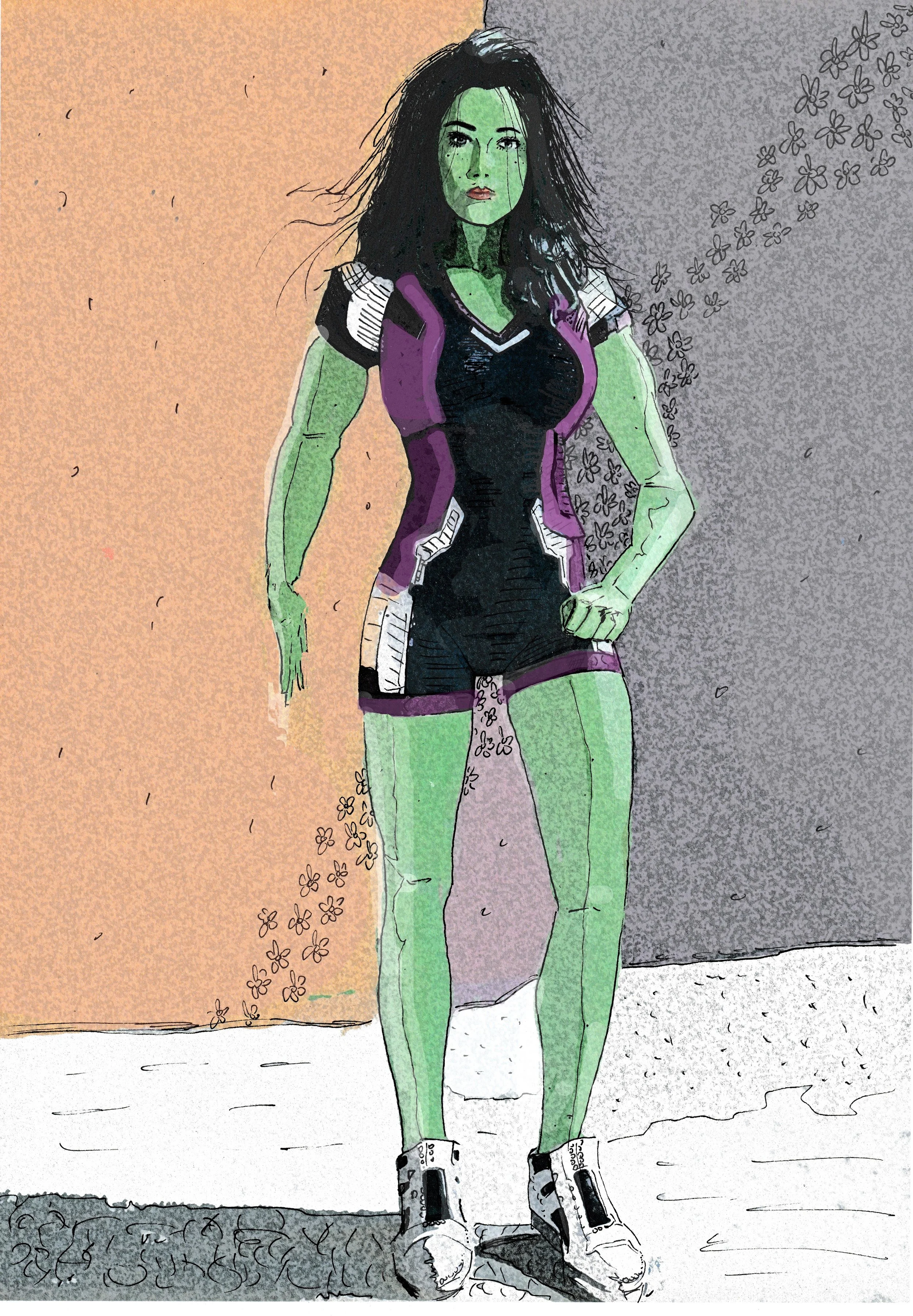
Just for fun some artwork of She-Hulk that I did last week.
“Here’s the thing, Bruce. I’m great at controlling my anger. I do it all the time. When I’m catcalled in the streets. When incompetent men explain my own area of expertise to me. I do it pretty much every day. Because if I don’t, I will get called emotional, or difficult, or might just literally get murdered.” She-Hulk
Interview with Julian Barnes

This is an extract from an interview I did with Julian Barnes back in 2008. Barnes has received several awards and honours for his writing, including the 2011 Man Booker Prize for The Sense of an Ending. Three additional novels were shortlisted for the Man Booker Prize (Flaubert's Parrot 1984, England, England 1998, and Arthur & George 2005)
Tell me a bit about yourself.
Six foot two, eyes of blue – will that do? Faulkner said a writer's obituary should consist of the line: 'He wrote books, then he died.' Not a bad anonymity to aim at, but nowadays impossible.
Out of the books you have written, which has been your favourite and why?
It varies. The first because it was the first, the second because it proved I wasn't a one-book author, the third because it was the first to be translated, and so on. If someone mentions a book of mine and says they really didn't like it (not that this happens very often), I instantly think it's the best of all. Writers are a contrary breed.
What does the novel do in today’s culture and do you think it has changed from Renard's day?
It does what it always does: it tells a story which tells the truth. Forms change, social reality changes, but the point and meaning of narrative have changed very little - as has the human animal.
What advice would you give new writers?
Don't do it unless you really want to; don't do it expecting to earn a living from it; don't do it expecting praise, or to solve the problems of your life; don't do it in the belief that you live in a country which is broadly welcoming to culture; don't do it unless you love language and narrative and form. And don't listen too much to advice-giving writers clutching their bus passes. Find your own way.
What do you think about the state of the publishing industry today and has it changed since you started?
It's changed enormously. I spent seven or eight years writing my first novel, hesitantly delivered the manuscript, got £750 (I think) for it, did a single interview to publicise it, watched the book just about scramble into paperback, savoured the moment and the whole process, loved 'being a writer', but still never imagined I would make a living from writing books. Publishers didn't expect to make money from a 'literary novelist', as they were quaintly called, for three, four, five books - a literary career was, characteristically, something that was slowly built. Nowadays a novel may be bought from a first-time writer on the basis of a synopsis, 50 pages, a c.v. and a glamorous photo - and lots of money may be paid. And then the marketing of the book kicks in, and if the book takes off, the young star is suddenly in a world of photographers and multi-city tours. The commercial pressures are much, much greater – the publisher wants their money back, the pressure on a young writer to write that 'break-through' book is more severe. I'm not against young writers making money - on the contrary. But I am in favour of young writers writing the best books they are capable of. And being protected against disappointment. Though maybe disappointment will make them better writers, who knows?
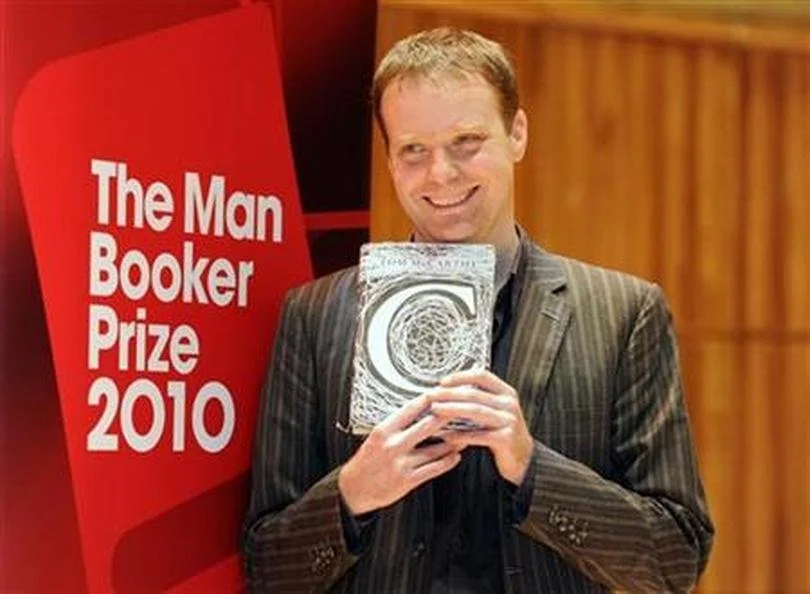
Tom McCarthy - Don't Go Anywhere Near a 'Creative Writing' Class
Tom McCarthy is an English writer and artist. His debut novel, Remainder, was published in 2005. McCarthy has twice been nominated for the Man Booker Prize.

This is a snippet of an interview I did with him back in August 2008.
What's your ideal night out/in?
I once woke up to find, on my coffee table, a pair of skimpy knickers, white powder residue and an open copy of Francis Ponge's 'La Partie Pris des Choses'. I can't remember what I'd done the night before - but whatever it was, that's my perfect night.
When did you start writing?
When I was very young. My mother told me the story of Macbeth and I thought: that's great, I'll write it. So I borrowed a neighbour's typewriter and wrote 'Macbeth, by Tom McCarthy'. The neighbour said: 'Shouldn't it be 'by William Shakespeare?' and I asked: 'Why?' I was right. Someone wrote Macbeth before Shakespeare too. I don't think I finished my version; somewhere around Act II I went and played outside instead.
How did you feel about Metronome's response to Waterstones to stock Reminder that, "If people want it, they can go to the ICA."
Metronome Press was an art project, run by two curators, launched firmly from within the art world and its networks. Having one foot in that world myself, I'd noticed that that was the environment in which people actually read proper literature rather than the latest Booker/Richard-and-Judy crap. So I was happy for them to take that stance. Perhaps at the time I wasn't, but in retrospect I thought it was pretty cool; and as it worked out, bigger publishers would bring out their own editions of Remainder later and put them in Waterstones and every other shop. The Metronome edition was just a limited run thing anyway.
The title of the book "Remainder" is the same term used for books returned by retailers that are not sold. Was this an intentional joke on your behalf and how confident were you that the book would sell?
I was aware of the bookselling connotation of the term 'remainder', and liked it, but it wasn't the main one. I was thinking mainly of residues, marks, traces, things left behind; also the half in the eight-and-a-half million pound settlement the hero receives. I had no idea if the book would sell a lot or not; the question didn't cross my mind. What interested me was the kind of critical response it would get.
What advice would you give fellow writers?
Read voraciously, and don't go anywhere near a 'creative writing' class.
Dave McKean Interview

This is an extract of an interview I did with Dave McKean back in 2010. Dave's work incorporates drawing, painting, photography, collage, found objects, digital art, and sculpture. He has illustrated works by authors such as Neil Gaiman, Grant Morrison, Heston Blumenthal, Ray Bradbury and Stephen King. He has also directed three feature films.
...
Can you set the scene for a typical day – do you work from a gothic castle with a moat full of crocodiles – are there images pasted all over your floor and walls?
Yes. Well, okay, not really. I work at home. There are turrets, although they are really the rather more mundane, oast house roundels, and there is a moat, again, rather more mundane fish pond with rickety bridge over to my studio. Some people prefer to be surrounded by their own work, others prefer to look at other people's. I'm in the latter category. I try and keep the place pretty clean and sorted. I find it hard to work, or think, in a mess.
Do you aim to re- interpret the author’s work or provide images that match the text or a mixture of both?
It depends on the book, they all have their own demands. As a general rule I don't really like illustrations that just literally show a selection of scenes from the story. I think the pleasure of a book is seeing those scenes in your own mind. However, if you can find a way to create a mood, a feeling, or emphasise the drama, then that's usually a good start. Even better, if the imagery has its own job to do, then that is the ideal.
Do you think we should be exploring the themes of death more in children’s art and literature as it is often a taboo subject in adult conversation.
Not obsessively, but ultimately all art and writing is about death to a degree. It's the final deadline. It can only do good to open these tough subjects up for discussion and the imagination in young readers. That's what stories and art are for, to deal with these kinds of emotions in a safe place. To see that we do come out the other side of fear, grief, shock - that we can carry on. They are rehearsals for adult life.
Are you fed up with people asking you what Neil Gaiman’s like to work with and how much do they airbrush him these days!?
No, I've had a long working relationship with Neil, so he always comes up. And yes, it is amazing what you can do with photoshop these days.
What’s Neil Gaiman like to work with?
Who?
Pet hates? Things that drive you nuts?
People mostly. Too many of them. Queues. Tourists (why can't they just stay home and send money?). General bigotries and belief systems. Middle men, grey men, money men, marketing departments. Pushy parents. People who drive cars while wearing hats, people who drive in the fast lane all the time, or undertake on the motorway. Just other drivers generally really. I watched The Omega Man, and thought Charlton Heston had a pretty good life.
Can I have a signed photo and picture?
Of what? Neil, I assume.
Wells Blog
Duis mollis, est non commodo luctus, nisi erat porttitor ligula, eget lacinia odio sem nec elit. Maecenas faucibus mollis interdum. Nulla vitae elit libero, a pharetra augue.